
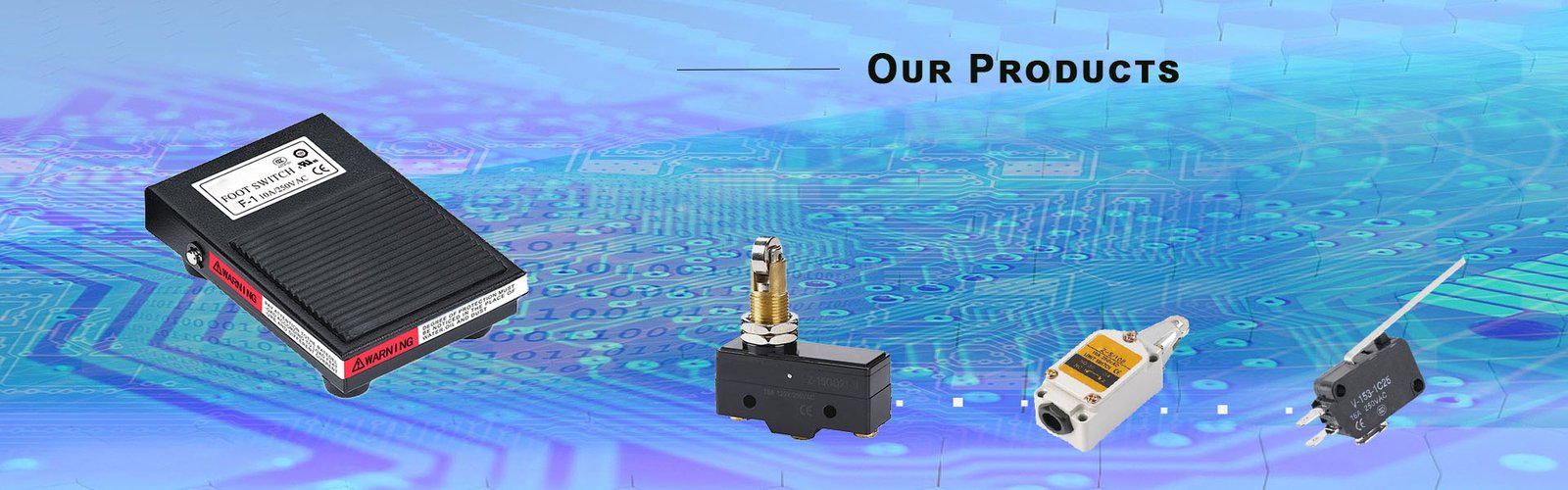

The stroke control position switch detects the linear or rotational travel of moving machine parts and triggers an electrical signal at a predetermined point. When the actuator lever or plunger contacts a moving component, the internal contacts change state. This signal can stop, start, or reverse motor operation based on the equipment control logic.
These devices convert physical displacement into an electrical switching action. They do not require external power to operate the contact mechanism. The switching point remains consistent across repeated cycles, providing dependable position feedback for automated sequences.
Different actuator styles suit different motion profiles. Roller lever actuators work well for fast-moving parts, while plunger types suit direct vertical contact. Adjustable actuator positions allow fine-tuning of the trigger point during installation and commissioning.
Want to learn more about our products? You can click me.
The contact mechanism is designed for high cycle life and stable switching performance. Silver alloy contacts provide reliable electrical conductivity and resist wear under frequent operation. The contact gap ensures proper insulation between open contacts under rated voltage conditions.
Enclosure protection guards internal components against dust, moisture, and mechanical impact. Industrial-grade housing materials maintain structural integrity in demanding workshop conditions. Cable entry points support secure wiring connections and prevent accidental pull-out.
The actuator assembly is engineered for consistent actuation force across the product range. This ensures predictable response when contacted by moving machinery. Mounting dimensions follow standard industrial patterns for easy installation and direct replacement.
SHUYI applies systematic quality control from raw material inspection through final product testing. Each batch of components is verified for dimensional accuracy and material compliance before assembly begins. This prevents defective parts from entering the production line and reaching customers.
Each stroke control position switch undergoes electrical testing to verify contact resistance, insulation performance, and switching reliability. Mechanical cycle testing confirms the actuator response and contact life under repeated operation. These tests ensure every unit meets established performance standards before shipment.
The company maintains consistent product specifications across production batches. This means replacement units match the dimensions and electrical characteristics of previously installed devices. Clear technical documentation supports proper integration into customer control systems and panel designs.
Machine tool equipment uses these switches to detect tool position and workpiece travel. They provide end-of-travel signals that prevent overrun and protect machine components from collision damage. Operators rely on consistent switching for safe and repeatable machining cycles.
Conveyor and material handling systems install these devices at key transition points. They trigger lane changes, sortation actions, and stop commands based on package or carton position. This improves sorting accuracy and reduces jams along the production line.
Automated assembly lines use stroke feedback to confirm that cylinders, presses, and actuators have reached their intended position. The signal advances the production sequence only after verified movement completion. This reduces assembly errors and improves overall line efficiency and output quality.
Correct selection begins with understanding the motion type and travel distance of the application. The actuator style must match the direction and speed of the moving part. Electrical rating should exceed the actual load current to ensure safe and reliable switching over time.
Environmental conditions influence enclosure and material choices. Facilities with high dust, moisture, or temperature variation require appropriate protection ratings. Considering these factors at the selection stage extends service life and reduces unexpected field failures.
Routine maintenance includes checking actuator alignment, tightening mounting screws, and inspecting for visible wear. Wiring connections should be verified periodically to prevent loose contact issues. Keeping spare units available for critical positions minimizes downtime when replacement becomes necessary.
China Electronic Switch Co.,Ltd.
Web:www.cnshuyi.com
Tel/Fax: 0086-577-62840011
WhatsApp: 008613355775769
#Stroke Control Position Switch,switch,#switches,#zjshuyi,#cnswitch,#chinashuyi,#limitswitch,#micro switch