
Limit Switch Uses for Automation.

Discover real limit switch uses in industrial automation. Detect position, control travel, and protect equipment. A practical guide.
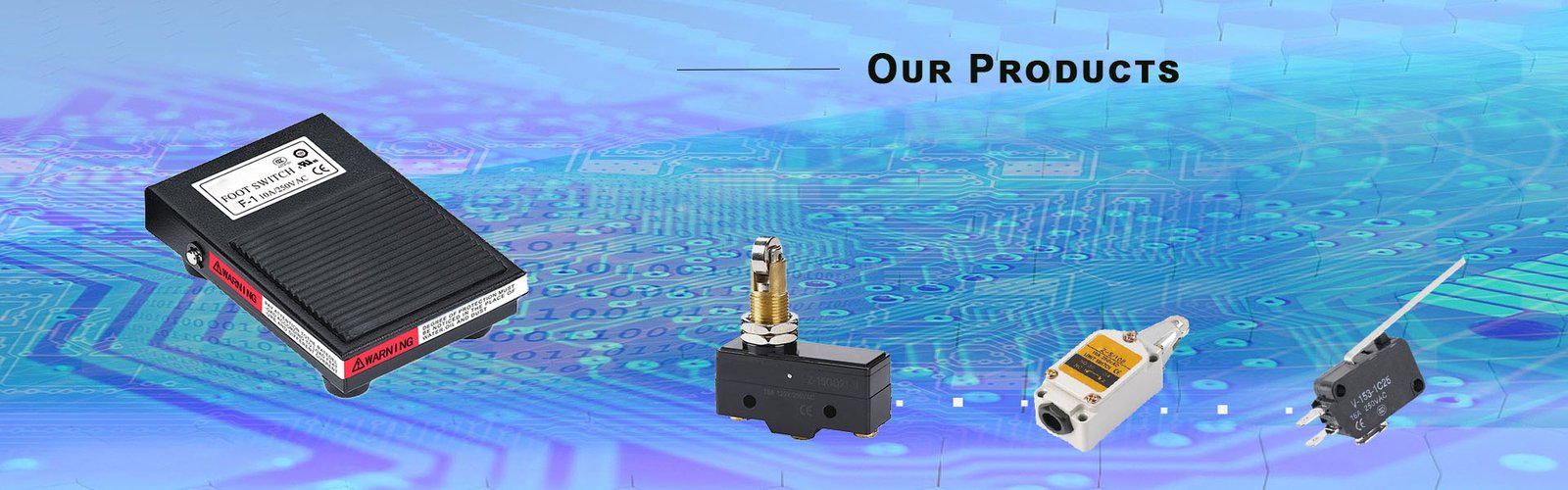
Want to learn more about our products? You can click me.
Machines need to know where they are. Does the arm have the part? Is the door fully closed? Did the conveyor move far enough? A limit switch answers these questions. It is a simple sensor that detects when something touches it. No complex programming. No fragile electronics. Just reliable, physical feedback. Let me walk you through how a limit switch works in real factories.
Every moving part needs a stopping point. Think about an overhead crane. The trolley moves left and right along a beam. You do not want it crashing into the end. So you install a limit switch at each end. When the trolley hits the switch, it cuts power and stops the motion. Simple and effective.
The same idea applies to hoists. A limit switch prevents the hook from winding up too high. Without it, the wire rope would snap or the hook would jam. Elevators use this technology too. Multiple limit switch units control the slow-down zone and the final stop position. This keeps people safe and equipment undamaged.
Safety doors and machine guards need monitoring. If a guard opens while the machine runs, someone could get hurt. A limit switch mounted on the guard frame detects exactly when the door moves. Wire it into the control circuit. The moment the guard opens, the limit switch breaks the circuit and stops the machine.
You see this setup on injection molding machines, robotic cells, and large presses. Operators rely on a limit switch to confirm that every guard is closed before starting a cycle. It is a simple layer of protection, but it saves fingers and hands every single day.
Do you need to know how many boxes passed a certain point? A limit switch can do that too. Mount it next to a conveyor belt. Each time a box goes by, it pushes the switch’s actuator arm. That sends a signal to your counter or PLC. You can track production totals or trigger the next step in your process.
Many packaging lines use a limit switch for exactly this job. The switch never misses a count because it physically touches every box. No sensor blindness. No false readings from dust or light. Just solid, dependable counting.
Hydraulic cylinders and pneumatic cylinders move loads back and forth. But how do you know when the cylinder reaches the end of its stroke? You guess? No. You add a limit switch. Place it at the extended position and another at the retracted position. Each switch tells your control system, “I am here.”
This feedback allows your machine to sequence correctly. The cylinder extends, hits the limit switch, and then the next action starts. Without that signal, the machine would have to rely on timers. Timers are risky because cylinder speed changes with air pressure or load. A limit switch gives you certainty every single cycle.
Sometimes you just need to know if something is there. Is a pallet sitting on the roller conveyor? Is a workpiece clamped in the fixture? A limit switch with a roller lever or a spring rod can tell you. When an object presses the actuator, the switch changes state.
This works great in dirty or wet environments where optical sensors struggle. A limit switch does not care about dust, oil splashes, or vibration. It keeps working. For example, car wash tunnels use limit switch units to detect where the vehicle is. Water and soap do not bother the switch at all.
You might wonder why anyone uses a physical switch when laser sensors exist. The answer is durability and simplicity. A limit switch needs no calibration. It does not drift over time. It handles heavy currents directly without extra relays. And it costs much less than a proximity sensor.
Plus, a limit switch gives you a positive “click” feeling. Operators can hear it activate. That audible feedback confirms the switch made contact. You cannot get that from a non-contact sensor.

A limit switch handles four main jobs. It controls travel limits, detects guard positions, counts parts, and confirms cylinder strokes. It also works in harsh conditions that fool other sensors. For straightforward position sensing, nothing beats a limit switch. Add one to your next machine build. You will appreciate the reliability.
China Electronic Switch Co.,Ltd.
Web:www.cnshuyi.com
Tel/Fax: 0086-577-62840011
WhatsApp: 008613355775769
#Limit Switch Uses #Limit Switch