
Foot Switch Uses You’ll Love.
Discover practical foot switch uses in workshops, medical settings, and more. Free your hands and work faster with the right switch.
Want to learn more about our products? You can click me.
You have two hands. But sometimes you need a third. That’s where a foot switch steps in. It lets you control a machine or device using only your foot. Your hands stay focused on the actual work.
So what are the main foot switch uses? Think about any task where you need to start, stop, or change a setting without letting go of your tools. Surgeons use them to adjust microscopes. Musicians use them to switch guitar effects. Woodworkers use them to turn dust collectors on and off. In each case, the foot pedal keeps the workflow smooth and uninterrupted. You don’t lose a second putting down a tool just to flip a switch.
Let me give you a real example. You’re running a bench grinder. Both hands hold a metal piece against the wheel. Reaching for a wall switch means stopping, setting down the piece, flipping the switch, then starting again. That breaks your rhythm and wastes time.
Now add a foot switch. You tap it with your toe to start the grinder. Your hands never move. When you finish, tap again to stop. Among all foot switch uses, workshop applications save the most time. Drill presses, lathes, sanders, and saws all work great with a foot control. Some heavy-duty models handle up to 15 amps, so they manage real power tools without a problem. Just make sure you pick a momentary switch—it only stays on while you press it. That adds an extra layer of safety.
Medical equipment relies heavily on foot switch uses. A dentist needs both hands to hold instruments inside a patient’s mouth. A foot pedal controls the chair position or the handpiece speed. Same goes for surgical lights and exam tables. No one wants a doctor taking their hands off a sterile tool to adjust something.
Creative pros benefit too. Recording studios use foot switches to punch in and out of record mode. Guitarists build entire pedalboards around multiple foot switches for effects like delay, reverb, and distortion. Even photographers use foot switches to trigger cameras remotely, keeping their hands on the lens or the subject. In all these cases, the foot switch quietly does its job so you can focus on yours.
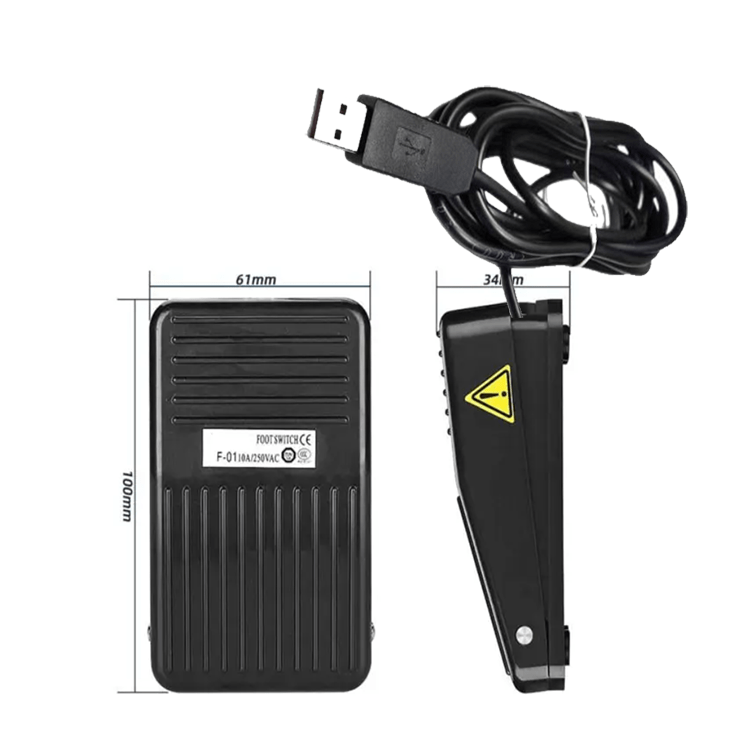
Choosing a foot switch isn’t complicated. First, decide between momentary and latching. Momentary means the switch activates only while you press it. Latching means one press turns it on, another press turns it off. For safety with power tools, choose momentary. For turning a work light on and off, latching works fine.
Next, check the electrical rating. A foot switch rated for 10 amps handles most small tools and lights. For larger motors, go with 15 or 20 amps. Also look at the housing material. Plastic works for clean, dry areas. Metal or sealed rubber stands up to grease, dust, and moisture. Finally, test the action before you buy. A good foot switch gives you clear tactile feedback so you know exactly when it engages. When you match the switch to your real needs, those foot switch uses become simple, safe, and genuinely helpful every single day.
China Electronic Switch Co.,Ltd.
Web:www.cnshuyi.com
Tel/Fax: 0086-577-62840011
WhatsApp: 008613355775769
#foot switch uses #switch