
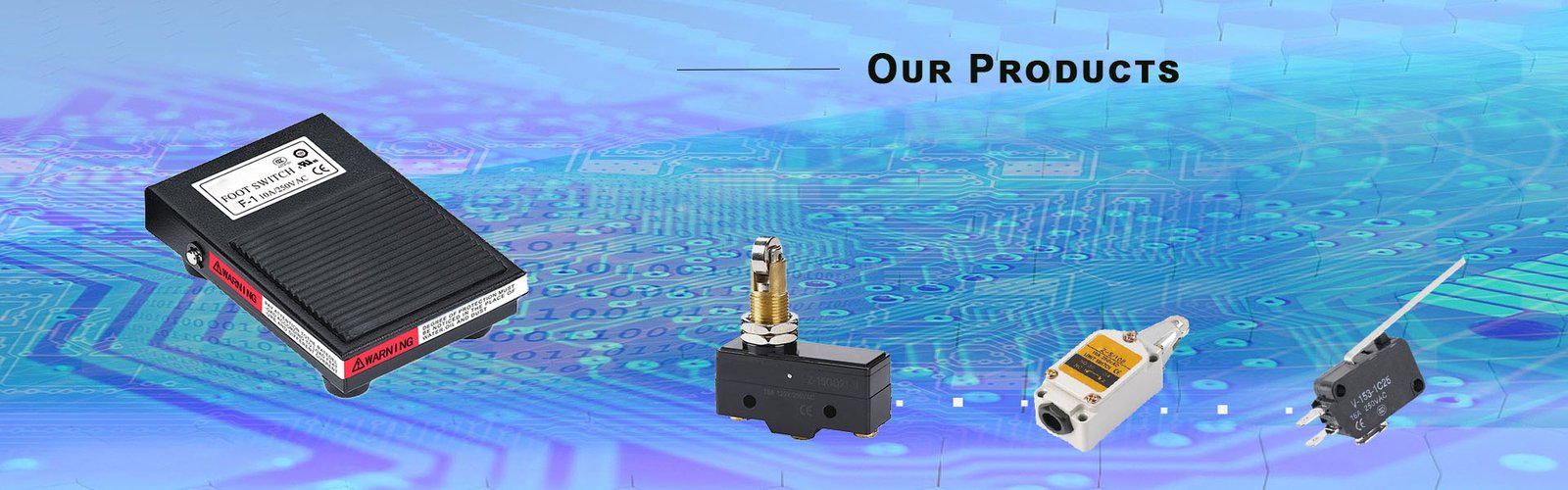
How Limit Switches Control Industrial Motion.

Discover how industrial limit switches provide precise position control for machinery. Learn about types like roller lever and safety-rated switches for automation.
Want to learn more about our products? You can click me.
In any automated system, knowing when something has reached its position is fundamental. That’s exactly where the industrial limit switch proves indispensable. These robust electromechanical devices act as the “eyes” of a machine, providing precise feedback when a moving part contacts its actuator. From controlling the travel of a linear slide to ensuring a safety door is securely closed, limit switches deliver the reliable signals that keep processes safe, repeatable, and efficient.
The primary job of a limit switch is straightforward: detect the presence or absence of an object and convert that physical contact into an electrical control signal. When a machine part—like a gate, lift, or robotic arm—makes contact with the switch’s actuator, it triggers an internal mechanism to change the state of its electrical contacts. This immediate signal tells the control system to stop, start, or change a sequence. This simple yet critical function prevents over-travel, enables precise positioning for repeatable operations, and initiates the next step in an automated cycle, forming the backbone of many control logic systems.
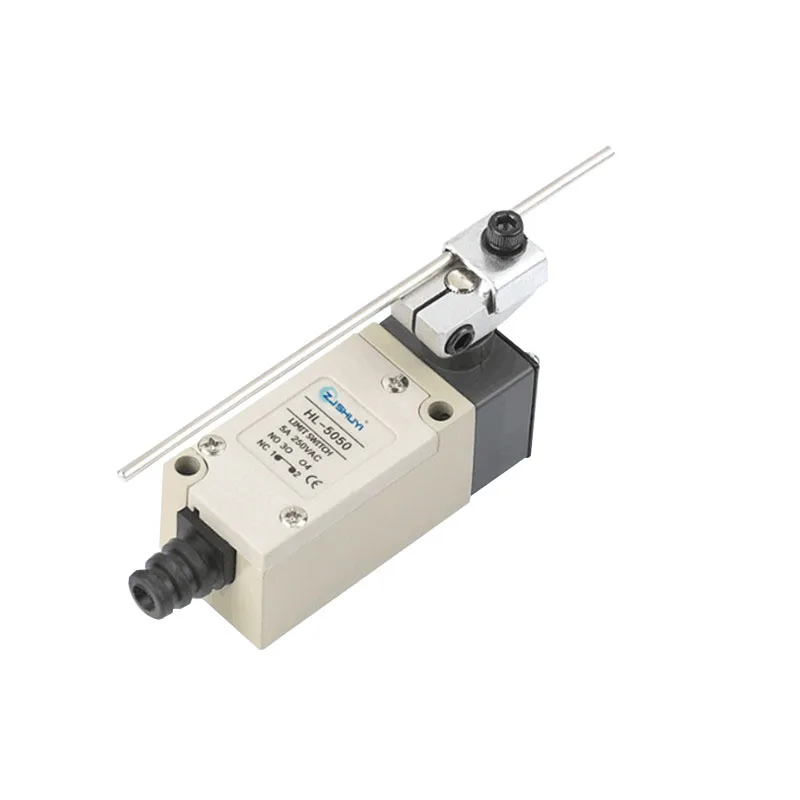
Choosing the right limit switch often depends on the actuator style, which is designed for specific kinds of motion. The roller lever actuator is one of the most common. Its rotating roller minimizes friction and wear when struck by a moving part, making it ideal for linear or cam-driven applications. For straight, direct push motions, a plunger or push-rod actuator offers a compact solution. In tight spaces or for delicate operations, a flexible whisker or rod-style actuator can detect very light forces or movements from multiple directions. The right actuator ensures reliable operation and long service life for the application.
Industrial environments demand toughness, so a reliable limit switch needs specific protective features. A high Ingress Protection (IP) rating, such as IP67, indicates strong sealing against dust and temporary water immersion, which is crucial for washdown areas or outdoor use. The electrical contact rating must comfortably exceed the expected load to prevent arcing and premature failure. For critical safety functions, positively driven contacts are essential. This mechanical design ensures that if a normally closed contact welds shut, the normally open contact cannot also close, maintaining the integrity of the safety circuit and helping to prevent dangerous machine failures.
To select the best limit switch, start by defining your needs. First, identify the type of motion and the force available to actuate the switch. Next, consider the electrical requirements: what voltage and current (AC or DC) will the contacts switch? Then, evaluate the operating environment—will it face oil, coolants, extreme temperatures, or heavy vibration? Finally, determine the required mounting style and whether you need a simple two-wire switch or a more complex multi-circuit device with both normally open and normally closed contacts. Matching these factors to the switch’s specifications ensures optimal performance and reliability.

In essence, the humble limit switch remains a cornerstone of industrial automation. By providing accurate, on/off feedback at precise locations, these components enable controlled motion, ensure operational sequences, and enhance machine safety. Understanding their function, actuator types, and key specifications allows you to implement them effectively, adding a layer of reliable, physical intelligence to your automated systems.
Web:www.cnshuyi.com;
Tel/Fax: 0086-577-62840011
WhatsApp: 008613355775769
#Industrial Limit Switches